
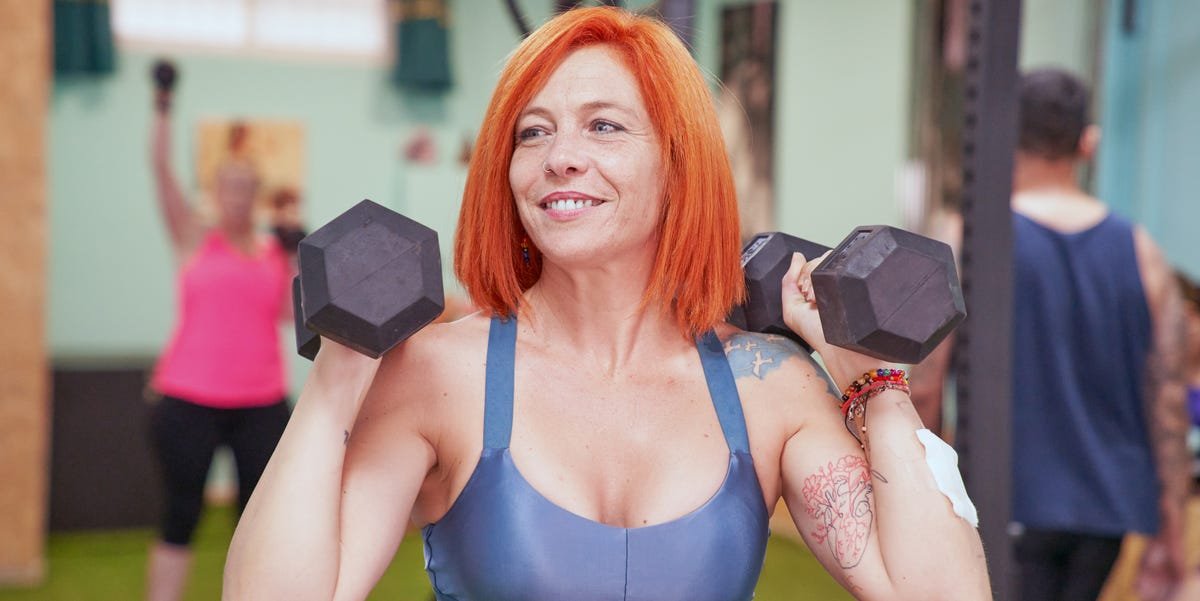
Strength Training for Women Over 50 Can Help Protect Muscle, Bone, and Balance as Menopause Changes the Body
NEW YORK, NY — Strength training becomes especially valuable after menopause because hormonal changes can speed up muscle and bone loss. Experts say women in their 50s and beyond may need a different approach than the workouts that worked earlier in life.
Doctors and trainers cited in the story say resistance exercise can help support strength, metabolism, heart health, mood, sleep and overall vitality. They also note that a doctor’s OK is a smart first step before starting something new.
Start with bodyweight exercises before adding resistance
Trainer Tina Tang recommends beginning with simple movements that do not require a gym, including chair or box squats, incline push-ups and supported lunges or step-backs. She suggested two to three sets of eight to 10 reps, twice a week, after a proper warm-up.
Once those basics feel manageable, she advises gradually adding weight and expanding into movement patterns such as squats, lunges, hinges, pushes, pulls and core work. The point is steady progress, not rushing to heavy loads right away.
Challenge the last reps and vary the weekly routine
Tang said the final one or two repetitions in a set should feel difficult, even when using lighter weights. If those reps are demanding, the workout is doing its job and can be progressed over time.
She said a balanced week can include two lifting days, about five days of 30-minute brisk cardio such as walking, and one or two days for mobility or stretching. Variety can also come from group classes or different exercises on recovery days.
Recovery, protein, hydration, and support help drive results
Experts emphasized that recovery matters as much as the workout itself. Walking on off days, sleeping enough, and eating well can help reduce soreness and support progress between sessions.
Protein becomes especially important with age, and Tang said active people may aim for roughly 1.2 to 2.0 grams per kilogram of body weight, though individual needs vary. She also pointed to vegetables, whole grains or minimally processed carbs, good hydration, and in some cases creatine as a possible add-on to resistance training.
Power moves and accountability can help women stay strong
Tang said older adults can also add a small amount of power work, such as light jumps, bounds or medicine-ball tosses, after warming up and before the main strength session. She said these movements help preserve fast-twitch muscle fibers used for quick reactions and may reduce fall risk.
For many women, consistency improves with support. Hiring a trainer, even briefly, can help with form, while group classes can add structure and motivation. Several women in the story said the payoff showed up in everyday life, from carrying heavier groceries to standing up from a low stool without using their hands.
Stay with Pine Whispers for the latest verified news and updates.